
12 Feb Mes CHamoru 2026, Slinging, and Why This All Matters for Guam & the Marianas
Every March, Guam turns up the volume on its roots.
Mes CHamoru (CHamoru Heritage Month) is a whole month dedicated to celebrating our language, history, and culture—through food, festivals, school programs, art shows, and village events. It’s when places like Umatac host the CHamoru Heritage Day Festival, with reenactments, traditional performances, and cultural competitions that honor thousands of years of Chamorro life.
Mes CHamoru sits on top of decades of effort to keep Chamorro language and culture alive in schools and public life, backed by laws that pushed for bilingual, bicultural education starting in the 1970s.
So when we talk about Mes CHamoru, we’re not just talking about a “theme month.”
We’re talking about a living promise to not lose who we are.
Enter the Sling: Åcho’ Atupat & Atupat
Now add slinging to that picture.
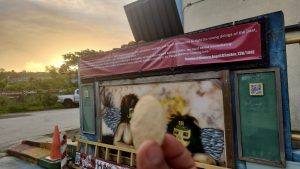
For ancient CHamoru warriors, the sling and slingstone—atupat (sling) and åcho’ atupat (slingstone)—were the signature weapon of the islands. These stones were carefully shaped, sharpened at both ends, and launched with serious power using slings braided from pandanus or coconut fiber.
They weren’t toys.
They were used in hunting and in war, including resistance against Spanish colonization in the 1600s.
Over time, the slingstone became more than a weapon:
- It shows up in art and jewelry.
- It appears in modern cultural projects, films, and research as a symbol of Chamorro survival.
- It’s even part of how brands and groups talk about identity and pride today.
So when you see a slingstone shape, it’s not random.
It’s a quiet way of saying: “We’re still here.”
Why Slinging Workshops Are a Big Deal
That’s why these Slinging Fundamentals workshops for Mes CHamoru are so powerful:
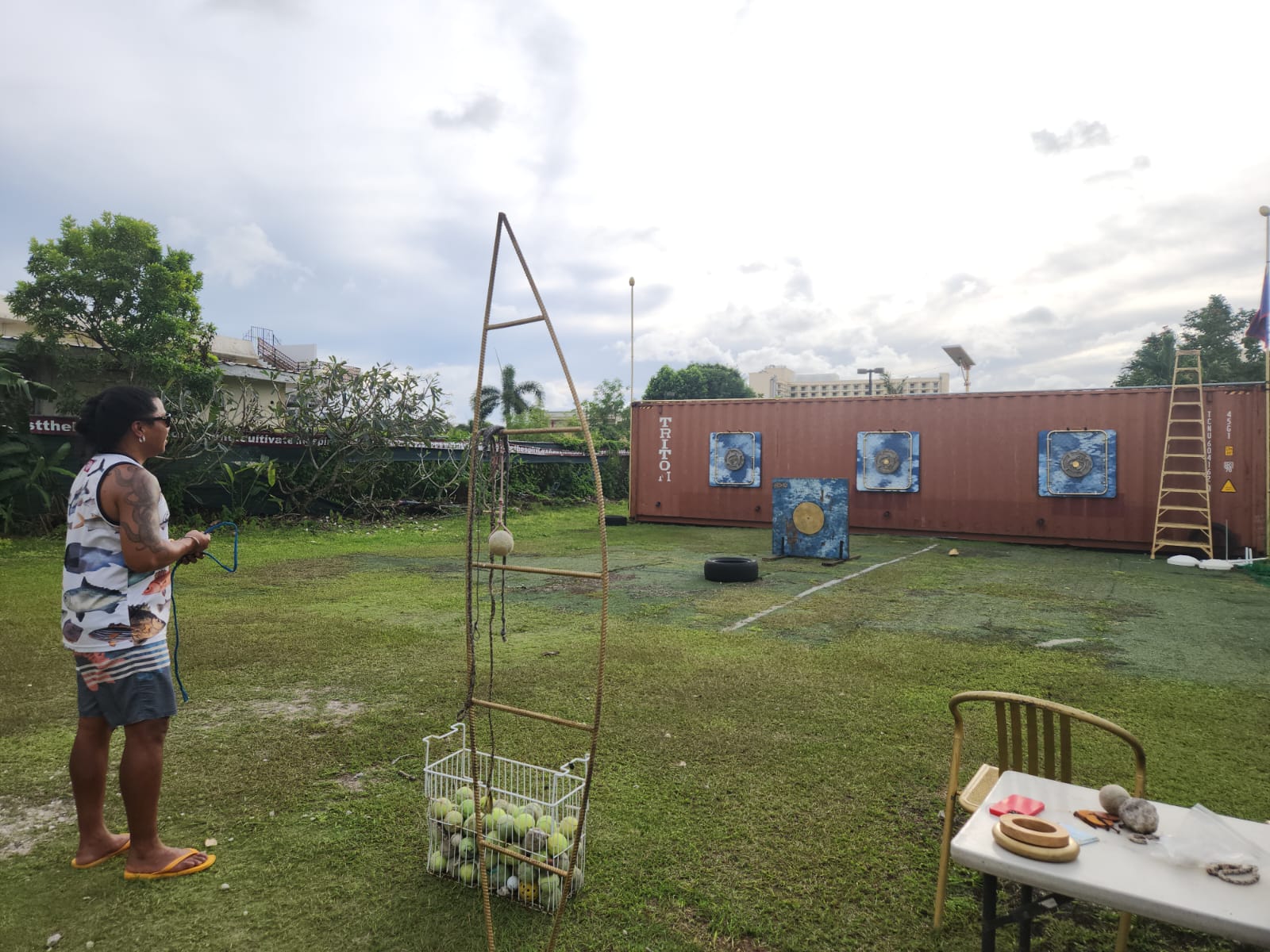
“In preparation for slinging tournaments and events planned for Mes CHamoru, we will be offering introductory workshops for Slinging Fundamentals every Wednesday through February and March from 5–7 p.m. at The Field of Dreams, 135 Fujita Road Tumon… Whether you are interested in slinging for competition, culture, or community service… School teachers are highly encouraged and all interested are invited to join.”
This isn’t just about learning how to throw a stone far.
It’s about:
- Competition – Friendly events where people can test skill, focus, and control.
- Culture – Handling the same kind of tools our ancestors used and learning the stories behind them.
- Community service – Bringing demos to schools, festivals, and youth programs, helping kids connect to something older and bigger than themselves.
And the location—the Field of Dreams in the Golden Plaza, right by the Fokai Shop, Fujita Rd. Tumon—makes it feel like what it is: a community playground for culture and movement.
Connecting Culture, Body, and Mind
Slinging checks a lot of boxes at once:
- It’s physical – You use balance, timing, coordination, and focus.
- It’s mental – You learn patience, control, and respect. One careless throw can hurt someone; that’s why discipline matters.
- It’s historical – Every time you load a stone, you’re repeating a motion your ancestors refined over generations.
In a world full of screens and scrolling, slinging gives kids (and adults) a chance to:
- Step on the grass
- Feel the wind
- Listen to a Chamorro word like åcho’ atupat and know what it means—not just in English, but in the body.
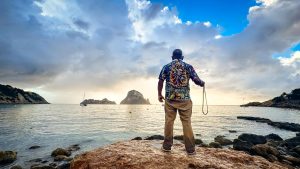
A Perfect Fit for Mes CHamoru
Mes CHamoru is about raising up indigenous identity and giving people real experiences, not just posters and hashtags.
Slinging fits that mission perfectly because:
- It turns history into activity – instead of just reading about Chamorro warriors, you practice one of their core skills.
- It invites teachers in – workshops give educators a hands-on tool to bring culture into lessons.
- It builds intergenerational bridges – parents, kids, manåmko’ can all learn, watch, and cheer together.
- It opens doors to other conversations – from slingstones you can talk about latte, seafaring, land, language, and the long story of the Marianas.
One slingstone can start a whole cultural talk story.
Slinging as a Gateway to Pride
Imagine this:
A teacher brings a class to the Field of Dreams.
They learn how to braid a simple sling.
They hear the word åcho’ atupat.
They see old photos of slingstones in museums and on the Guam flag.
They throw their first stone and feel that snap of power.
Now Mes CHamoru isn’t just “Chamorro month at school.”
Now it’s something they did with their own hands.
That’s how pride grows:
Not just from speeches, but from experience.
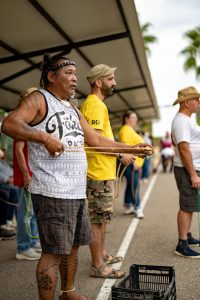
Let’s Rock (Literally 😄)
So when you see those invites for slinging workshops:
- It’s not just target practice.
- It’s not just another event on a busy calendar.
It’s one more way to remember, relearn, and reconnect—for Guam, for the Marianas, and for the next generation who will carry the culture forward.
Whether you go to sling for fun, for competition, or just to watch and support:
You’re helping keep an ancient art alive.
You’re helping Mes CHamoru mean more than just decorations.
You’re helping make sure that, in the middle of Tumon, in the middle of modern life…
The stones still fly.
The stories still travel.